Growth Culture Requires Growth Infrastructure: The Moncur University Story
Most organizations list "growth" as a core value, but few build the systems to deliver it. Learn how practitioner-led training and knowledge codification can transform aspirational values into tangible career pathways—and why the gap between stated values and lived experience is where culture dies.
TL;DR: Organizational "growth" as a value is meaningless without infrastructure to support it. Moncur turned this value into reality by launching Moncur University—a practitioner-led training system that codifies institutional knowledge and creates a third path to career advancement beyond exceptional performance or time-based promotion. The key: building systems, not just stating aspirations.
"Growth" Is a Hollow Value (Until You Build the System to Back It Up)
"Growth" might be the most common value in the agency world—and one of the emptiest.
It's easy to put on a careers page. It sounds aspirational in a pitch deck. But telling your team "we want you to grow" without showing them how is like saying "be more creative." Sure, but what does that actually mean on a Tuesday afternoon when someone's stuck chasing down answers?
The uncomfortable truth: values without infrastructure aren't culture. They're wallpaper.
Why Most Growth Programs Fail: The Knowledge Transfer Problem
Here's what typically happens at agencies (and most companies, frankly): knowledge gets stuck at the top. Senior people accumulate expertise over years, but there's no system to transfer it. Training feels like checkbox compliance—something to sit through, not something that changes how you work. And "growth" becomes something you're supposed to figure out on your own, through osmosis and observation.
The result? A gap between what organizations say they value and what people actually experience day-to-day. That gap is where culture goes to die.
If you've worked at an agency — or hired one — you've probably felt this. The stated values sound great. The lived experience tells a different story: the "open door policy" that's never actually available, the "we invest in our people" that means a LinkedIn Learning license, the "growth mindset" that comes with no clear path forward.
From Empty Promise to Professional Development Infrastructure
At Moncur, "Growth" has been a core value for years. But, this year, we asked ourselves a harder question: what's the structure that makes it real? Not the aspiration—the infrastructure.
At Moncur, our answer is Moncur University.
It's not a training program in the traditional sense. It's a system designed to turn a value into action—to give every person on our team a concrete path forward, not just an encouragement to "keep growing."
A few things make it different from typical corporate training:
It's practitioner-led. Every course is taught by someone actively doing the work, facing the same challenges, solving the same problems. This isn't executives lecturing down. It's peers sharing frameworks they use daily.
It codifies our institutional knowledge. Every agency has nuanced approaches that make their work distinctive. Usually, that knowledge lives in people's heads and gets passed down inconsistently. Moncur University makes it explicit and accessible to everyone.
It's built for progress, not perfection. We launched knowing it will evolve. The goal isn't a polished, static curriculum, it's a living system that grows based on what our team actually needs.
The Critical Question Every Organization Should Ask
This isn't just a Moncur story. It's a question worth asking anywhere:
If you say you value growth—where's the system that delivers it? If curiosity matters—what structures make people more curious? If excellence is a core value—how do people learn what excellence actually looks like at your organization?
Culture can't live in documents alone. It needs practices, pathways, tangible investment.
There's a framework we think about for career advancement: you move forward by either
(A) Doing something objectively exceptional
(B) Accumulating years of experience
(C) Learning in ways that let you leapfrog the experience gap
Most organizations only offer the first two. The third requires intentional systems—ways to give people access to senior-level thinking before they've put in a decade.
That's what we're trying to build.
Building People, Not Just Process
For David Moncur, our CEO, Moncur University has been a long-held dream years in the making. Not because it's a nice-to-have perk, but because he's always believed that what makes Moncur special shouldn't live only in the heads of a few highly experienced people. That kind of institutional knowledge should be accessible to everyone.
"It's been my dream for many years to have a Moncur University, so realizing that dream is wonderful for building out the vision I have for our agency," David explains. "What other agency has training with actually valuable, meaningful, career-growth-impacting content? Probably none, or at least very few."
Yes, this serves Moncur's interests—a stronger team means better work, which means better outcomes for clients. But David sees it as something more: "We're investing in our teammates and fellow humans, helping them get better at what they do. Sure, I hope they apply it here at Moncur, but even more importantly I'm happy to give them the gift of professional development that will serve them throughout their careers."
That's the bet we're making. Not just on process, but on people.
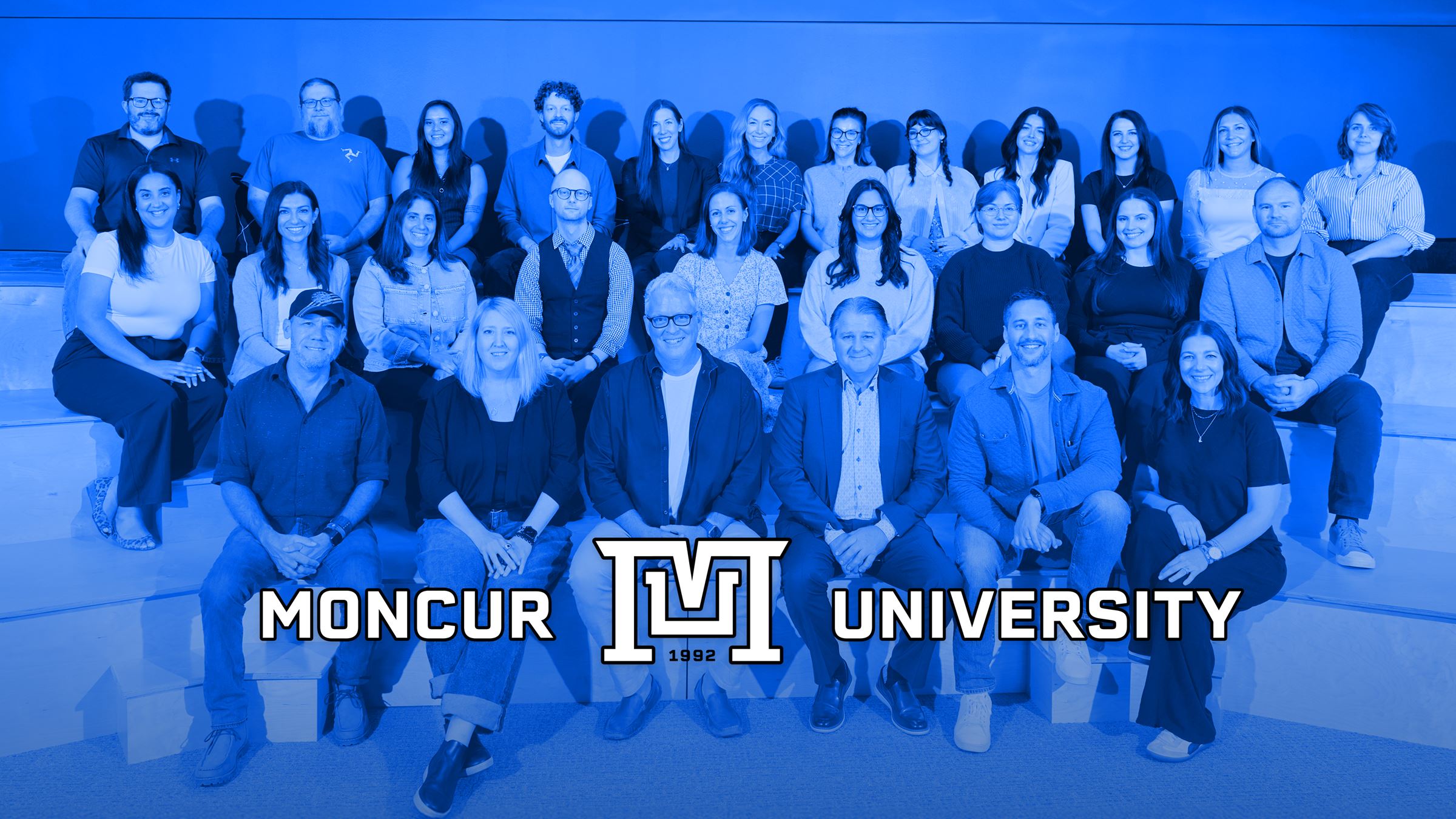
We brought Moncur University to life during our recent all-team onsite, dubbed “Welcome Week” and branded with collegiate style to emphasize the excitement around this new initiative. It felt right to launch something this significant face-to-face, not through a Zoom link.
Turning Values Into Infrastructure
Your values—growth, integrity, collaboration, innovation—don't have to be hollow. But it takes more than a statement on the website or in the brand book to make it real. It takes systems, investment, and a willingness to codify what you know instead of hoarding it.
The question for any organization: what would it look like to turn your values into infrastructure?