
Summary:
AEC firms lose projects when technical expertise gets lost in jargon. To communicate capabilities to non-technical buyers:
- Lead with business outcomes rather than methodology
- Tailor messaging to each stakeholder type (executives, technical reviewers, procurement)
- Translate features into benefits that resonate with decision-makers who control budgets
Your engineering brilliance means nothing if decision-makers can't understand why it matters to them.
You see the elegant structural solution that saved six months of construction time. The innovative BIM coordination that eliminated $2 million in clashes. The sustainable design approach that will cut energy costs by 40% over the building's lifetime.
Your client sees... jargon.
This disconnect sits at the heart of why exceptional AEC (architecture, engineering, and construction) firms lose to less qualified competitors. The same technical expertise that makes you valuable can also become the very barrier that keeps you invisible. Especially when the people making selection decisions usually aren't engineers or architects themselves.
Why Do AEC Firms Lose to Less Qualified Competitors?
Here's a gut check: 72% of B2B purchases now involve high-complexity buying groups spanning multiple functions, including finance, operations, and end users who may never set foot on a jobsite (Demandbase, 2025). The average buying committee includes 10 to 11 stakeholders (6Sense, 2025), and 79% of purchases require CFO approval (TrustRadius, 2024).
That’s a lot of data to basically say that your carefully crafted technical capabilities section is being evaluated by people who likely don't speak your language—yet they're often the ones with signing authority.
Meanwhile, Moncur's Breaking Ground research found that 72% of top contractors still rely on "quality, on-time, on-budget" messaging as their primary positioning. They're describing what they do, not why it matters to the people writing the checks.
But let’s be clear. The firms that win aren't dumbing down their expertise. They're translating it into business outcomes that resonate across the entire buying committee.
The Expert's Curse: When Knowing Too Much Hurts You
Try explaining your smartphone to your grandmother. You know every feature, every capability, every shortcut. But starting where you are—instead of where she is—guarantees frustration on both sides.
The same dynamic plays out every time a technical professional tries to communicate value to a non-technical buyer. You see the brilliant engineering behind that foundation system, the innovative approach to that structural challenge, and the game-changing technology integration that makes it all work.
Meanwhile, your prospect knows what you do, but they just can't see why your approach is worth paying more for. They may be impressed, but they might not even be sure why.
The solution isn't simplification. It's reorientation. Starting where your audience actually is, then building a bridge to what you want them to understand.
How Should AEC Firms Communicate Value to Non-Technical Buyers?
Every piece of communication—from your website to your proposals to your LinkedIn posts—should answer one question first: What does the client walk away with?
This shift looks different depending on which channel you're communicating.
On Your Website
Most AEC websites read like capability inventories. Services listed. Markets served. A project gallery with square footage and completion dates.
Non-technical buyers don't need to know you offer "pre-construction services." They need to know you catch budget problems in design before they become change orders in the field.
Compare these approaches:
Capability-focused: "We provide comprehensive structural engineering services for commercial, institutional, and industrial projects."
Outcome-focused: "We help facility managers sleep at night by designing structures that perform for decades without the costly surprises that plague buildings engineered to minimum code."
The second version signals that you understand business stakes, not just technical requirements.

In Your Proposals
Open most proposals in this industry and you'll find the same process description: Schematic Design, Design Development, Construction Documents, Bidding, Construction Administration.
This is a missed opportunity. Your process is one of the few things you can actually own—but only if you name it and connect it to client outcomes.
Consider a structural engineering firm that branded their approach "Practice Clarity"—a methodology focused on transparent communication and early problem identification. The name implies a specific outcome. It gives prospects something to remember and reference. And it positions the firm's process as distinct from competitors following identical industry phases.
In Presentations and Interviews
Selection committees often include a mix of technical and non-technical decision-makers. The technical folks want to know you can do the work. The non-technical folks want to know you understand their business.
Smart firms prepare layered presentations:
For the technical audience: Detailed methodology, relevant project experience, team qualifications
For the business audience: Risk mitigation, schedule certainty, budget protection, operational outcomes
For everyone: Stories that connect technical decisions to business results
One construction firm won a major healthcare project by spending the first five minutes of their interview not discussing construction—but discussing patient experience. They showed they understood that the building wasn't the point. The healing environment was.
On LinkedIn and via Thought Leadership
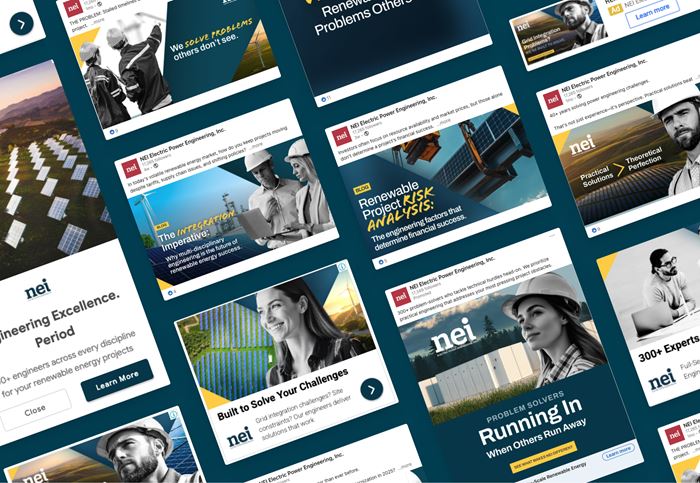
Today’s B2B buyers conduct extensive research before engaging with any vendor. Nearly 83% define their purchase requirements before ever speaking with sales (6Sense, 2025). They're forming opinions about your firm through your digital presence.
Technical content that performs well with non-technical audiences follows a pattern: lead with the problem, explain the stakes, then reveal your approach.
Instead of: "Our team recently completed a complex seismic retrofit using innovative base isolation technology."
Try: "When this hospital needed to stay operational during a major earthquake upgrade, shutting down wasn't an option. Here's how we kept 400 beds running while fundamentally transforming the building's structural system."
The technical details can follow. But the hook has to land where your audience lives.
How Should Different AEC Roles Approach Marketing Communication?
Different stakeholders require different translations of the same capability.
For the Principal/Owner Managing Marketing
You're stretched thin, handling marketing between client calls and project management. You need communication frameworks that work across multiple situations without requiring custom development every time.
Your quick win: Audit your three most-used project descriptions. For each, identify the business problem you solved—not the technical solution you delivered. Rewrite the opening sentence to lead with that business outcome.
For the Marketing Director
You're coordinating between technical staff who want to showcase expertise and leadership who want to win more work. You need systems that bridge both needs.
Your quick win: Create a "translation template" for your team. When a technical professional gives you content, run it through three questions: What business problem does this solve? What would have happened if we hadn't solved it? What was different about the client's business after we finished?
For the CMO
You're building brand strategy that positions the firm for growth. You need messaging frameworks that scale across all channels and align technical teams with business objectives.
Your quick win: Develop persona-specific messaging matrices that map your core capabilities to the specific concerns of different buyer types—owners, facility managers, CFOs, end users. Ensure every piece of content can be filtered through the appropriate lens.
The Touchpoint Audit
Pull up your website, your last proposal, and your LinkedIn company page. For each, ask:
Position: Are you describing capabilities or client outcomes?
Process: Are you listing generic phases or a methodology you actually own?
Professionals: Are you reciting credentials or revealing perspective that connects to client needs?
Portfolio: Are you reporting specs or telling stories about problems solved?
If any answer leans toward the first option, you've spotted where your message is falling flat with non-technical buyers.
The Bottom Line
Your technical capabilities are valuable. The firms that win don't hide their expertise. They frame it through the lens of business impact that resonates with every stakeholder in the buying process.
This isn't about becoming less technical. It's about becoming more relevant to the people who decide whether you get the opportunity to demonstrate that technical excellence in the first place.
The path from invisible to undeniable runs through communication that meets your audience where they are—then shows them why your capabilities matter to the outcomes they care about.
Want to go deeper? Read The Ultimate Guide to AEC Marketing for the complete framework on positioning, differentiation, and communication that converts.
About Moncur
For 30+ years, Moncur has helped architecture, engineering, and construction firms develop communication frameworks that drive real growth. Our team brings both the analytical mindset to understand your technical excellence and the creative talent to make it shine.
Ready to translate your capabilities into communication that wins? Let's talk.